
Dental Abscess/Tooth Infection
A dental abscess is a collection of pus caused by a bacterial infection in or around a tooth. Find out what causes a tooth infection, the signs to look for and how it is treated.
Quick Links
At a Glance:
|
What it is |
A bacterial infection affecting a tooth or its surrounding tissues, which can result in a collection of pus called a dental abscess. |
|
Types of dental abscess |
Periapical, periodontal and gingival abscesses, depending on where the infection develops. |
|
Common symptoms |
In acute abscess: persistent or throbbing toothache, pain when biting, swollen or tender gums, pus, facial swelling and sometimes fever In chronic abscess: Little or no pain, often presenting as a small to moderately-sized gum pimple and still functional. |
|
Possible causes |
Deep tooth decay, pulp infection, cracked teeth, dental trauma, damaged restorations and periodontal disease. |
|
How it is assessed |
Clinical examination, pulp sensitivity testing, bite and percussion tests, periodontal assessment and dental X-rays where appropriate. |
|
Treatment options |
Abscess drainage, root canal treatment, periodontal care, dental restoration or tooth extraction, depending on the source and extent of infection. |
|
Can it heal on its own? |
Pain or swelling can temporarily improve if an abscess drains, but the underlying infection generally requires dental treatment. |
What is a dental abscess?
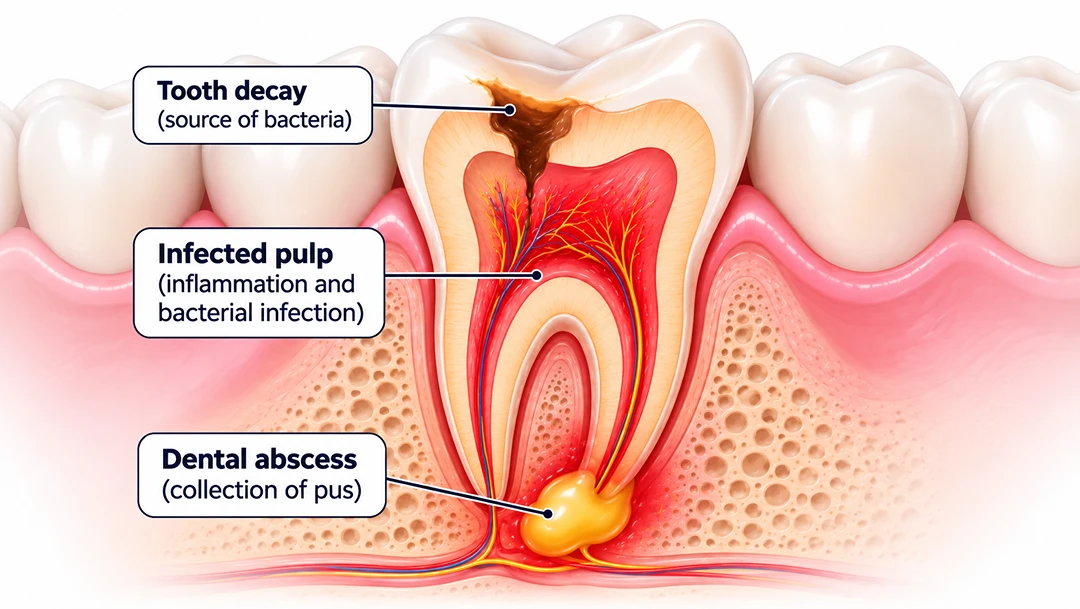
A dental abscess is a localised collection of pus caused by a bacterial infection in or around a tooth. It can develop near the tip of a tooth root or within the surrounding gums and supporting tissues. While an abscess often causes pain and swelling, some people experience few noticeable symptoms.
A tooth infection occurs when bacteria invade the dental pulp, the soft tissue containing nerves and blood vessels inside the tooth. This can happen when deep tooth decay, cracks or dental trauma damage the tooth’s protective structures. If left untreated, the infection can spread through the root canal system into the surrounding tissues, potentially forming an abscess.
However, not all dental abscesses originate inside the tooth. Some develop from infections affecting the gums and supporting tissues, while not every tooth infection results in an abscess.
A dental abscess requires professional assessment because the underlying infection can persist even when pain or swelling temporarily subsides.
Are there different types of dental abscess?
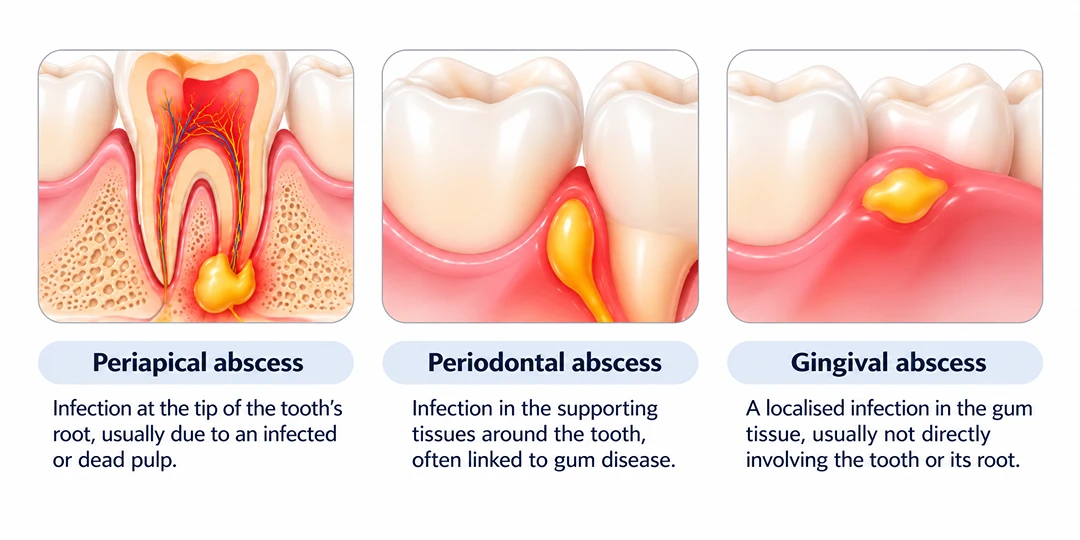
Dental abscesses can develop in different areas depending on where the infection originates. Identifying the source helps determine the appropriate treatment. The main types include:
- Periapical abscess — Develops around the tip of a tooth root, usually when bacteria infect the dental pulp and spread through the root canal system.
- Periodontal abscess — Forms within the supporting tissues alongside a tooth, often as a result of infection associated with a periodontal pocket.
- Gingival abscess — Develops within the gingiva and is confined strictly to the surface of the gum tissue, without involving the teeth and underlying jawbone.
Although these abscesses can cause similar symptoms, their treatment differs depending on the source and extent of the infection.
What can cause a tooth infection or dental abscess?
A tooth infection develops when bacteria gain access to tissues that would normally be protected. Damage to the tooth or disease affecting the surrounding gums can provide a pathway for infection. Common causes include:
- Deep tooth decay — untreated decay can progress through the enamel and dentine until bacteria reach the dental pulp.
- Cracked or fractured tooth — a sufficiently deep crack can provide a route for bacteria to enter the inner structures of the tooth.
- Dental trauma — an injury can damage the pulp even when there is little visible damage to the outside of the tooth.
- Damaged restorations — deterioration or leakage around an existing filling or restoration may allow bacteria to affect the underlying tooth.
- Periodontal disease — infection involving the gums and supporting tissues can lead to periodontal abscess formation.
- Previous dental problems — persistent, recurrent, or extra-radicular infection can occasionally occur around a tooth that has undergone earlier dental treatment.
A dental abscess is not necessarily a sign of poor oral hygiene alone. Structural damage, previous treatment, and dental trauma can also contribute to infection.
What are the signs of a dental abscess or tooth infection?
Symptoms vary according to the location and severity of the infection. Some infections cause pronounced toothache, while others are first noticed because of swelling or changes in the gum. Possible signs include:
- Persistent, severe or throbbing tooth pain.
- Pain or tenderness when biting or chewing.
- Sensitivity to hot or cold foods and drinks.
- Swelling or redness of the gum around the affected tooth.
- A pimple-like swelling on the gum.
- Pus or an unpleasant taste in the mouth.
- Swelling of the cheek, jaw or face.
- Tender or swollen lymph nodes in some cases.
- Fever or feeling generally unwell if infection becomes more extensive.
Not every infected tooth causes severe pain. If the dental pulp loses vitality, pain may decrease even though infection remains around the root.
When does a dental abscess require urgent attention?
A suspected dental abscess should be assessed promptly, even if the pain is manageable. Without appropriate treatment, the infection can spread beyond the affected tooth and surrounding gums.
Arrange prompt dental care if you experience significant tooth pain, gum swelling, pus or facial swelling.
Seek emergency medical attention if you develop:
- Rapidly increasing swelling of the face or neck
- Difficulty breathing or swallowing
- Significant difficulty opening your mouth
- Swelling extending towards or around the eye
- Fever accompanied by severe illness or rapidly worsening symptoms
These symptoms can indicate that the infection has spread into deeper tissues and requires urgent assessment.
An abscess that drains on its own may temporarily become less painful, but this does not mean the underlying infection has resolved. Dental treatment is still necessary.
How is a tooth infection or dental abscess diagnosed?
Your dentist will ask about your symptoms, when they began and whether you have noticed pain, swelling, discharge or sensitivity. The affected tooth and surrounding tissues will then be examined to identify the likely source of the infection. The assessment may include:
- Clinical examination — the teeth and gums are checked for decay, cracks, damaged restorations, swelling and drainage.
- Bite and percussion testing — gentle pressure or tapping may help identify tenderness around the affected tooth or root.
- Pulp sensitivity testing — tests may be used to assess the response of the dental pulp where an infection originating inside the tooth is suspected.
- Periodontal assessment — the gums and supporting tissues may be examined to determine whether the infection is periodontal in origin.
- Dental X-rays — imaging can help assess the tooth roots, surrounding bone and changes associated with infection.
These findings are considered together to determine where the infection originates and which treatment is appropriate.
How is a dental abscess or tooth infection treated?
Treatment aims to control the infection and address its underlying source.
|
Treatment |
When is it recommended? |
|
Drainage of the abscess |
When a collection of pus needs to be drained to relieve pressure and help control the localised infection. Further treatment is usually needed to address the source. |
|
Root canal treatment |
When infection originates within the dental pulp and the tooth can be preserved. The infected pulp tissue is removed, and the root canal system is cleaned, disinfected, filled, and sealed. |
|
Periodontal treatment |
When the abscess originates from the gums or supporting tissues. Treatment involves managing the periodontal infection, which may include drainage and cleaning of the affected area. |
|
Dental restoration |
When decay, cracks, or damaged restorations need to be repaired to protect a tooth that can be retained. |
|
Tooth extraction |
When the affected tooth is too extensively damaged or cannot be predictably preserved. Removing the tooth also helps eliminate the source of infection. |
Are antibiotics needed for a dental abscess?
Antibiotics are not always required for a localised dental abscess depending on clinical assessment. In many cases, the source of infection needs to be treated directly through measures such as drainage, root canal treatment or extraction rather than relying on medication alone.
Antibiotics may be prescribed when there are signs of spreading infection, systemic involvement or particular clinical circumstances that make them appropriate. The decision should be made by the treating dentist after assessing the infection. Taking antibiotics without treating the dental source can allow the problem to persist or recur.
Dental Abscess and Tooth Infection Treatment in Singapore
A dental abscess or tooth infection can be painful and concerning, especially when symptoms develop unexpectedly. Even if the discomfort subsides, the underlying infection may still require treatment.
At Aster Dental, our dentists assess the source and extent of dental infections to determine the appropriate treatment, with an emphasis on preserving the natural tooth where possible.
If you’re experiencing tooth pain, gum swelling or other signs of a dental infection, book an appointment with us for a detailed diagnosis and personalised treatment plan.
Frequently Asked Questions (FAQs)
Can a dental abscess go away on its own or burst?
A dental abscess can sometimes burst or drain into the mouth, causing an unpleasant taste and a temporary reduction in pain or swelling. However, this does not mean the infection has been cured. Bacteria can remain within the tooth or surrounding tissues, allowing the abscess to return. Dental assessment is necessary even if the symptoms improve.
What happens if a tooth infection is left untreated?
An untreated tooth infection can cause progressive bone loss around the affected tooth, recurrent abscesses and increasing swelling. In some cases, the infection can spread into surrounding facial or neck tissues and lead to serious complications.
Delaying treatment can also reduce the chances of preserving the natural tooth, particularly if decay or structural damage continues to progress.
Can dental abscesses and tooth infections be prevented?
Not all dental infections are preventable, particularly those caused by trauma. However, maintaining good oral hygiene and addressing dental problems early can reduce the risk.
Brush twice daily with fluoride toothpaste, clean between your teeth regularly and attend routine dental examinations. Have cavities, cracked teeth and damaged restorations assessed before they progress, and seek dental care if you develop persistent tooth pain or swelling.
Can I have a dental abscess without a toothache?
Yes. Some dental infections cause little or no pain, particularly when the dental pulp has lost vitality. Swelling, pus drainage or changes detected on dental X-rays can still indicate an infection that requires treatment.
Can a dental abscess cause bad breath or a bad taste?
Yes. Pus draining from an abscess can produce an unpleasant taste or contribute to bad breath. However, these symptoms can also result from other oral health conditions.
Can an abscess develop under a dental crown?
Yes. An abscess can develop beneath a dental crown if bacteria reach the dental pulp through decay, cracks or other damage. Infection can also arise from the tissues surrounding the crowned tooth.
Can a root canal-treated tooth develop an abscess?
Yes. Although root canal treatment aims to eliminate infection within the root canal system, persistent, recurrent, or extra-radicular infection can occasionally occur. Depending on the cause and condition of the tooth, further treatment may involve root canal retreatment, endodontic surgery or extraction.
Will painkillers cure a tooth infection?
No. Painkillers can temporarily relieve discomfort but do not eliminate the underlying infection. Dental treatment is needed to address the source of the infection.
Can an infected tooth be extracted?
Yes. Tooth extraction can be performed when an infected tooth cannot be predictably preserved. An active infection does not automatically prevent extraction, although the dentist will assess the extent of infection and the patient’s overall condition before proceeding.