
Tooth Sensitivity
Tooth sensitivity can cause short, sharp pain when teeth are exposed to hot, cold, sweet or acidic foods and drinks. Find out what causes sensitive teeth and how they are treated.
Quick Links
At a Glance:
What is it? | Pain or discomfort that occurs when sensitive areas of a tooth are exposed to certain triggers |
Common triggers | Cold or hot foods and drinks, sweet or acidic foods, cold air and brushing |
Possible causes | Enamel wear, exposed tooth roots, gum recession, tooth decay, cracks or damaged restorations |
How is it assessed? | Dental examination, review of symptoms and sensitivity testing, with dental imaging where appropriate |
Treatment options | Desensitising products, fluoride treatment, dental bonding, restorative treatment or treatment of the underlying dental condition |
When to see a dentist | If sensitivity is persistent, triggered by heat, worsening, affects a particular tooth or is accompanied by pain or other dental symptoms |
What is tooth sensitivity?
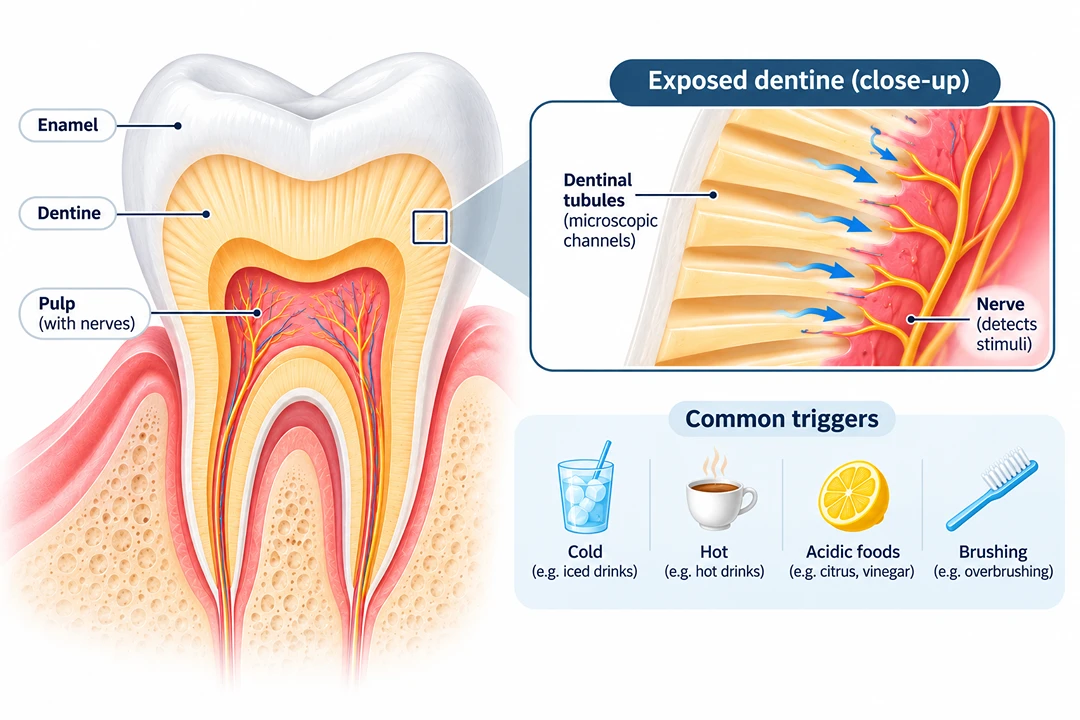
Tooth sensitivity is a sudden, sharp discomfort that occurs when your teeth come into contact with something cold, hot, sweet or acidic. Even everyday activities, such as drinking cold water or brushing your teeth, can trigger the pain. It may affect a single tooth or several teeth at once.
One common cause is dentine hypersensitivity, which develops when the dentine beneath the tooth’s protective enamel or root surface becomes exposed. Dentine contains thousands of microscopic channels called dentinal tubules. Changes in temperature or other stimuli can cause fluid movement within these tubules, activating nerves inside the tooth and producing a brief, sharp sensation.
However, not all tooth sensitivity is caused by exposed dentine. Cavities, cracked teeth and inflammation of the dental pulp can produce similar symptoms, sometimes requiring different treatment.
What can cause sensitive teeth?
Tooth sensitivity often develops when the protective enamel wears down or the gums recede, exposing the dentine underneath. However, sensitivity can also be a sign of an underlying dental problem, even when the tooth looks perfectly healthy.
Enamel wear and acid erosion
Enamel protects the outer surface of your teeth. When it wears away, the underlying dentine can become exposed, making teeth more sensitive to temperature changes and certain foods. Common causes include repeated exposure to acidic foods and drinks, acid reflux and teeth grinding. Unlike other tissues in the body, lost tooth enamel cannot regenerate.
Gum recession
When the gums recede, they expose parts of the tooth roots that are normally covered. Unlike the crown of the tooth, root surfaces do not have a protective enamel layer, making them more vulnerable to sensitivity. Gum recession can occur due to periodontal disease, excessive brushing pressure or other factors.
Tooth decay
Cavities gradually damage the protective layers of a tooth. As decay progresses deeper into the dentine, you may notice sensitivity to cold, hot or sweet foods. More advanced decay can eventually affect the dental pulp, causing more persistent pain.
Cracked or chipped teeth
Even a small crack can expose sensitive tooth structures or cause movement within the tooth during biting. This can produce discomfort when consuming hot or cold foods, or sharp pain when biting or releasing pressure. Some cracks in the teeth are difficult to see without a dental examination.
Worn or damaged dental restorations
Old fillings, loose crowns or damaged restorations can leave parts of a tooth exposed. Gaps around a restoration can also allow bacteria to enter, potentially leading to decay beneath it.
Aggressive brushing
Brushing too forcefully, particularly with a hard-bristled toothbrush, can contribute to gum recession and wear near the gumline. This may expose sensitive root surfaces over time.
Teeth grinding or clenching
Repeated grinding or clenching places excessive pressure on the teeth. This can contribute to tooth wear, cracks and discomfort, particularly when the underlying dentine becomes exposed.
What are the different patterns of tooth sensitivity?
Tooth sensitivity can feel different depending on what triggers the discomfort and how long it lasts. These patterns can provide clues about the underlying cause, although a dental examination is needed to determine the diagnosis.
Type of sensitivity | How it feels |
Cold sensitivity | A sudden, sharp pain when drinking cold beverages, eating ice cream or breathing in cold air. Brief discomfort is common with exposed dentine and pulp inflammation is reversible, while lingering pain can indicate an irreversible pulp inflammation which requires further investigation. |
Heat sensitivity | Pain or discomfort when consuming hot foods or drinks. Sensitivity that persists after the heat is removed often suggests an irreversible inflammation of the dental pulp. |
Sweet sensitivity | A sharp sensation when sugary foods or drinks contact the teeth, sometimes associated with exposed dentine or tooth decay. |
Acid sensitivity | Discomfort triggered by acidic foods and drinks, such as citrus fruits or vinegar, especially when dentine is exposed. |
Touch sensitivity | Sharp discomfort when brushing or touching an exposed tooth surface, often near the gumline. |
Biting sensitivity | Pain when biting down or releasing pressure, which can indicate a cracked tooth, a damaged restoration or another dental problem. |
Sensitivity that lingers, occurs without an obvious trigger or becomes progressively more painful should be assessed by a dentist, as these symptoms can indicate a problem beyond uncomplicated dentine hypersensitivity.
How is tooth sensitivity diagnosed?
Your dentist will first ask about your symptoms, including what triggers the sensitivity, how long it lasts and whether it affects one tooth or several. These details can help distinguish dentine hypersensitivity from other dental problems that cause similar discomfort.
Depending on your symptoms, the examination may include:
- Clinical examination — Checking for enamel wear, exposed tooth roots, gum recession, cavities, cracks and damaged fillings or crowns.
- Sensitivity testing — Applying controlled cold or air stimuli to identify sensitive areas and assess how the teeth respond.
- Pulp vitality testing — Cold or electrical tests are used to assess the dental pulp’s nerve response, helping the dentist evaluate its condition and identify possible inflammation or damage.
- Bite testing — Applying pressure to individual teeth to investigate possible cracks or discomfort associated with biting.
- Periodontal examination — Assessing the gums and measuring periodontal pocket depths to identify gum recession or periodontal disease.
- Dental X-rays — Examining areas that are not visible during a routine examination, such as decay between teeth or changes around the tooth roots.
Not every patient needs all these tests. In many cases, a clinical examination and targeted sensitivity testing are sufficient to identify exposed dentine. Additional investigations are considered when another dental condition is suspected.
How is tooth sensitivity treated?
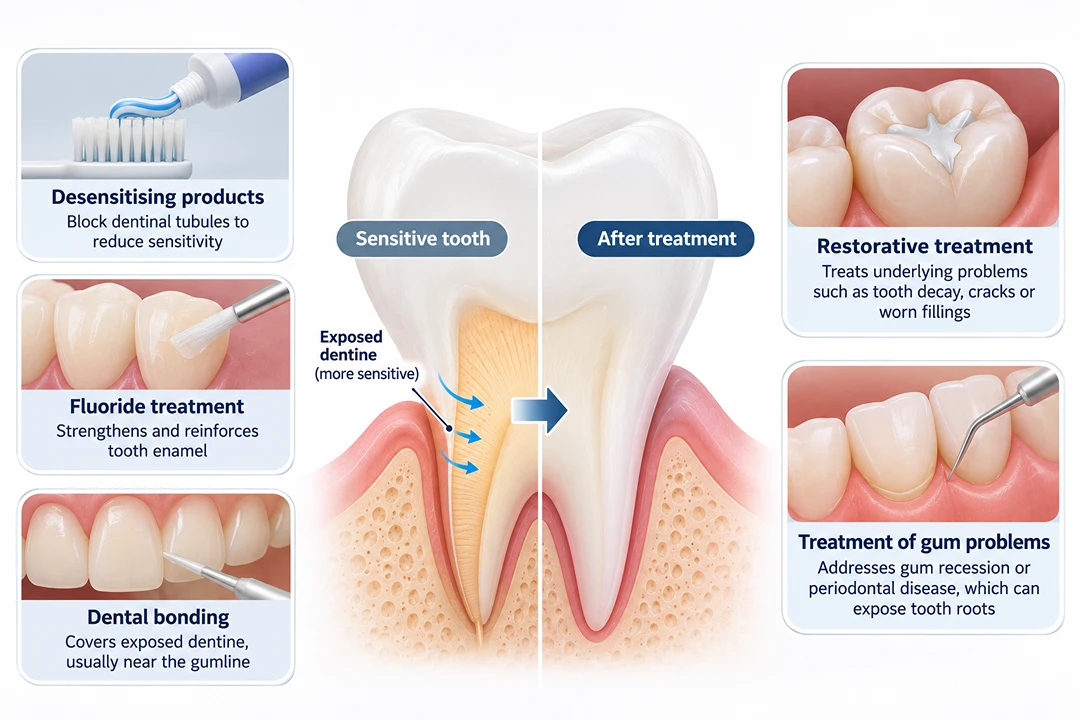
Treatment for sensitive teeth depends on what is causing the discomfort. When sensitivity results from exposed dentine, treatment generally focuses on reducing the response to external triggers or protecting the exposed surface. If tooth decay, a crack or another dental condition is responsible, that problem needs to be addressed.
Treatment | When is it recommended? |
Desensitising toothpaste | Often recommended for mild dentine hypersensitivity. Ingredients such as potassium nitrate or stannous fluoride help reduce sensitivity with consistent use. |
Fluoride treatment | Fluoride varnishes or other topical fluoride products, can help protect vulnerable tooth surfaces and reduce sensitivity in suitable cases. |
Dental bonding or protective coatings | Bonding agents or protective materials can be applied to exposed dentine, particularly around the gumline, to reduce sensitivity. |
Treatment for gum recession | Depending on the cause and extent of recession, treatment may involve protecting exposed roots, managing periodontal disease or considering gum grafting in selected cases. |
Dental fillings or restoration repair | Used when sensitivity results from tooth decay, damaged fillings or areas of lost tooth structure that require restoration. |
Cracked tooth treatment | A cracked tooth may require bonding, a crown or other restorative treatment. The approach depends on the location and extent of the crack. |
Root canal treatment | Required when sensitivity is caused by irreversible pulp inflammation or infection and the tooth can be preserved. The affected pulp is removed, and the root canals are cleaned and sealed. |
When should I see a dentist for sensitive teeth?
Occasional sensitivity to cold foods or drinks is common and does not always indicate a serious dental problem. However, sensitivity that persists, worsens or begins affecting your daily activities deserves closer attention.
Arrange a dental appointment if you notice:
- Sensitivity is persistent beyond 2 weeks, becomes more frequent or increasingly painful
- Discomfort concentrated in one particular tooth
- Pain that lingers after hot or cold stimulus
- Sharp pain when biting or chewing
- Visible cracks, cavities or damaged fillings
- Receding gums or exposed tooth roots accompanied by sensitivity
- Toothache that develops without an obvious trigger
Seek urgent dental care if sensitivity progresses to severe, continuous pain or is accompanied by gum or facial swelling, fever or signs of infection. Difficulty breathing or swallowing, or rapidly spreading facial or neck swelling, requires emergency medical attention.
Tooth sensitivity assessment and treatment in Singapore
Sensitive teeth can make everyday activities uncomfortable, especially when simple things like drinking cold water or enjoying a meal trigger pain. At Aster Dental, our dentists assess the underlying cause of your sensitivity and recommend treatment based on the condition of your teeth and gums.
If you’re experiencing persistent or worsening tooth sensitivity, contact us to arrange a consultation.
Frequently Asked Questions (FAQs)
Can tooth sensitivity go away on its own?
Mild tooth sensitivity can sometimes improve, especially when it follows a temporary trigger such as teeth whitening or a recent dental procedure. However, sensitivity caused by exposed dentine, gum recession or enamel loss often requires ongoing management.
If the discomfort persists or worsens, a dental examination can help identify whether an underlying condition needs treatment.
How can I relieve sensitive teeth at home?
Using a desensitising toothpaste regularly can help reduce discomfort. Brush gently with a soft-bristled toothbrush, avoid abrasive toothpaste and limit frequent exposure to acidic foods and drinks.
If cold foods trigger sensitivity, avoiding extreme temperatures temporarily can also help. These measures can manage symptoms but will not resolve problems such as cavities or cracked teeth.
Can tooth sensitivity be prevented?
Not every cause of tooth sensitivity is preventable, but good oral hygiene habits can reduce the risk. Brush twice daily with fluoride toothpaste using gentle pressure, and avoid brushing immediately after consuming acidic foods or drinks.
Regular dental examinations can also help identify enamel wear, gum recession and early tooth decay before they progress.
Why are my teeth suddenly sensitive to cold?
Sudden cold sensitivity can result from exposed dentine, gum recession, a new cavity, a cracked tooth or a damaged filling. If it affects one tooth, becomes increasingly painful or lingers after the cold stimulus is removed, arrange a dental examination to investigate the cause.
Is tooth sensitivity normal after teeth whitening?
Temporary sensitivity is a recognised side effect of teeth whitening. It usually improves within a few days after treatment, although the duration varies.
If the pain is severe, persistent or concentrated in one tooth, consult your dentist rather than assuming it is caused by whitening.
Can I use toothpaste for sensitive teeth every day?
Yes. Most desensitising toothpastes are intended for daily use and work best when used consistently. Depending on the active ingredients, it can take several days or weeks to notice improvement.
Choose a fluoride-containing product and follow the manufacturer’s instructions.
Can stress cause sensitive teeth?
Stress does not directly cause dentine hypersensitivity, but it can contribute to teeth grinding or clenching. Over time, these habits can cause tooth wear, cracks or jaw discomfort that may be mistaken for tooth sensitivity.
Why is only one tooth sensitive?
Sensitivity affecting a single tooth can indicate a localised problem, such as a cavity, crack, exposed root surface or damaged filling. The duration and type of pain can help your dentist identify the cause.
Persistent sensitivity in one tooth should be examined, particularly if it is accompanied by biting pain or spontaneous toothache.