
Emergency Endodontic Treatment
Experiencing severe tooth pain, swelling or dental infection? Learn when emergency endodontic treatment is needed and what to expect at Aster Dental.
Quick Links
What it is | Urgent dental care for conditions affecting the dental pulp or tissues surrounding the tooth roots. |
When it is needed | Severe tooth pain, acute dental infections, swelling or traumatic dental injuries that require prompt treatment. |
Common conditions | Irreversible pulpitis, dental abscesses, dental trauma and complications involving previously root canal-treated teeth. |
Possible symptoms | Persistent or throbbing tooth pain, prolonged sensitivity to hot or cold, pain when biting, gum swelling or facial swelling. |
How it is assessed | Clinical examination, pulp sensibility testing and dental imaging to identify the source of pain or infection. |
Treatment options | Emergency pulp treatment, root canal treatment, abscess drainage, endodontic retreatment or other procedures depending on the diagnosis. |
Treatment goal | To relieve acute pain, control infection, reduce complications and preserve the natural tooth whenever possible. |
What is emergency endodontic treatment?
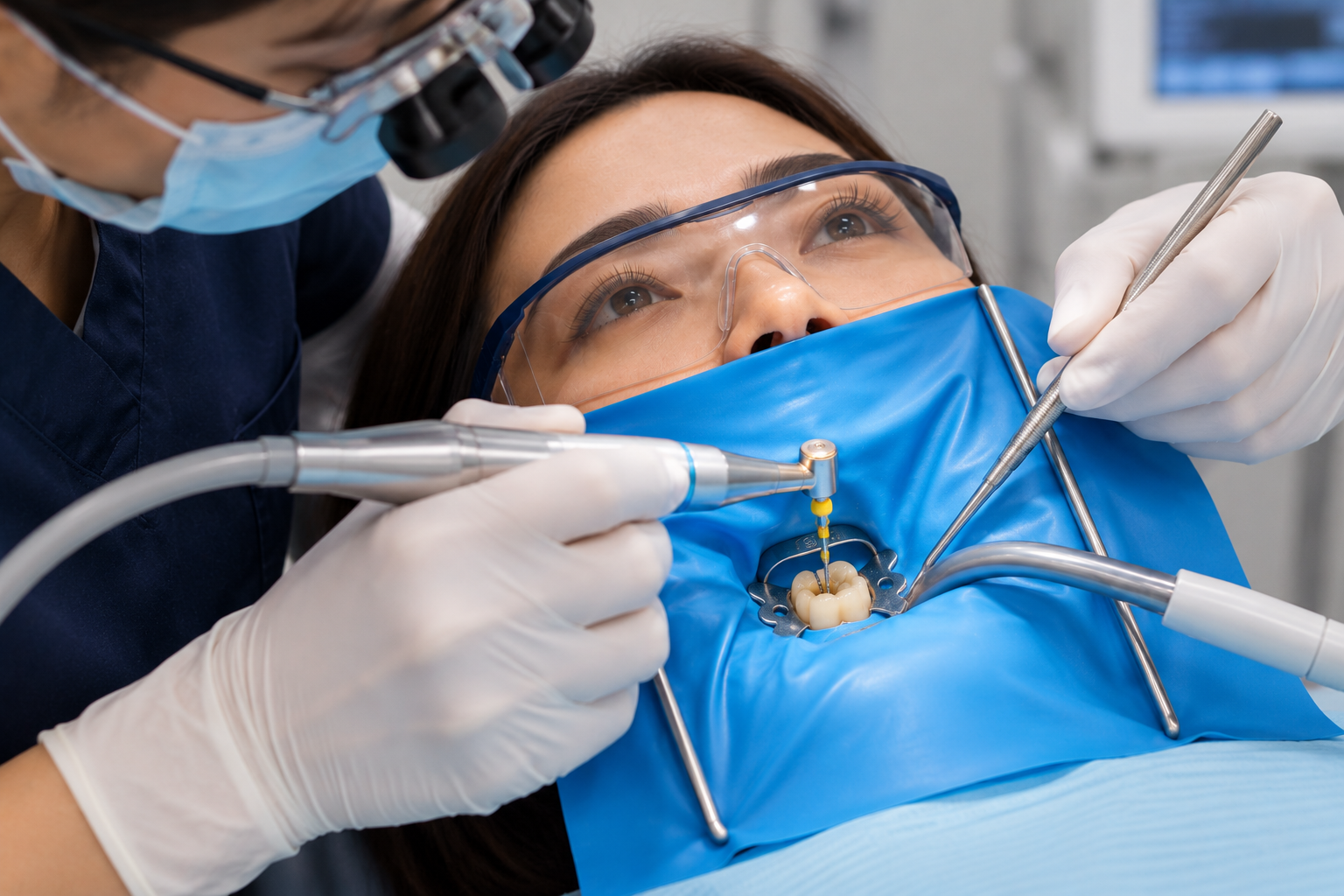
Emergency endodontic treatment provides urgent dental care for conditions affecting the dental pulp, the soft tissue inside a tooth containing nerves, blood vessels and connective tissue, or the tissues surrounding its roots.
When the pulp becomes severely inflamed or infected, it can cause intense tooth pain, swelling or discomfort that interferes with everyday activities. Dental trauma and complications involving previously root canal-treated teeth can also require urgent attention.
The primary goal of emergency endodontic treatment is to relieve pain, control infection and preserve the natural tooth whenever possible. Depending on the condition, treatment can involve removing inflamed or infected pulp tissue, draining an abscess or beginning root canal treatment.
Some patients can complete treatment during the emergency visit, while others require follow-up appointments to fully treat and restore the affected tooth.
When do you need emergency endodontic treatment?
Not every toothache requires emergency treatment. However, certain dental problems need prompt attention to relieve severe pain, manage infection or prevent further damage to the tooth.
Common reasons for seeking emergency endodontic treatment include:
- Severe or persistent toothache — Intense, throbbing or spontaneous pain that interferes with eating, sleeping or daily activities can indicate severe inflammation of the dental pulp.
- Dental abscess or infection — An infection within or around the tooth root can cause persistent pain, swelling, tenderness or a pimple-like bump on the gum that releases pus.
- Prolonged tooth sensitivity — Pain that lingers after exposure to hot or cold foods and drinks can indicate irreversible inflammation of the dental pulp.
- Dental trauma — A fractured, displaced or knocked-out permanent tooth requires urgent assessment, particularly when the pulp is exposed or the tooth has been displaced from its original position.
- Complications after root canal treatment — Severe pain, swelling or recurrent infection involving a previously treated tooth can indicate the need for further endodontic care.
When is it considered a dental emergency?
Seek prompt dental attention if you experience severe or worsening tooth pain, gum swelling or signs of dental infection. Early assessment can help address the underlying problem and improve the chances of preserving the affected tooth.
However, rapidly increasing facial or neck swelling, difficulty breathing or swallowing, or swelling accompanied by fever and significant illness can indicate a serious spreading infection. These symptoms require immediate medical attention at a hospital.
What to expect during emergency endodontic treatment
Before treatment: Examination and Diagnosis
Your endodontist will ask about your symptoms, including when the pain started, its severity and whether you have experienced swelling or previous dental problems.
A clinical examination will then be performed to assess the affected tooth and surrounding tissues. This can include:
- Pulp sensibility testing — Checking the tooth’s response to temperature or other stimuli to assess the condition of the dental pulp.
- Percussion and bite testing — Applying gentle pressure to identify tenderness around the tooth or its roots.
- Dental X-rays — Examining the roots, surrounding bone and signs of infection or structural damage.
These findings help your endodontist determine the source of the problem and whether emergency root canal treatment or another procedure is necessary.
During treatment: Managing Pain and Infection
Treatment depends on the diagnosis and the condition of the affected tooth. Local anaesthesia is typically administered to numb the area before treatment begins.
Treatment | What it involves |
Emergency pulpotomy | Removing inflamed pulp tissue from the crown portion of the tooth to relieve pain. |
Emergency pulpectomy | Removing more severely inflamed or infected pulp tissue from the pulp chamber and root canals, often as an initial stage of root canal treatment. |
Root canal treatment | Cleaning and disinfecting the root canals before filling and sealing them to prevent further bacterial contamination. |
Abscess drainage | Draining a collection of pus to relieve pressure and help control infection. |
Endodontic retreatment | Reassessing and treating a previously root canal-treated tooth when persistent or recurrent infection is present. |
Dental trauma management | Repositioning, stabilising or treating an injured tooth, depending on the type and severity of the injury. |
The immediate priority is to address the source of pain or infection. Not every patient requires root canal treatment, and some procedures are performed as an initial step before definitive treatment.
After treatment: Recovery and Follow-ups
Some tenderness or discomfort can persist for a few days after emergency endodontic treatment, particularly if the surrounding tissues were inflamed or infected.
If root canal treatment was only partially completed, your endodontist will arrange another appointment to finish cleaning, disinfecting and sealing the canals. A temporary filling may be placed to protect the tooth between visits.
Once treatment is complete, the tooth may require a permanent filling or crown to restore its function and protect the remaining tooth structure. Follow-up examinations can also be arranged to monitor healing, especially when an infection has affected the surrounding bone.
Can emergency endodontic treatment save my tooth?
Yes, emergency endodontic treatment can help save a natural tooth affected by severe pulp inflammation, infection or dental trauma. By addressing the underlying problem promptly, treatment can prevent further damage and improve the chances of preserving the tooth.
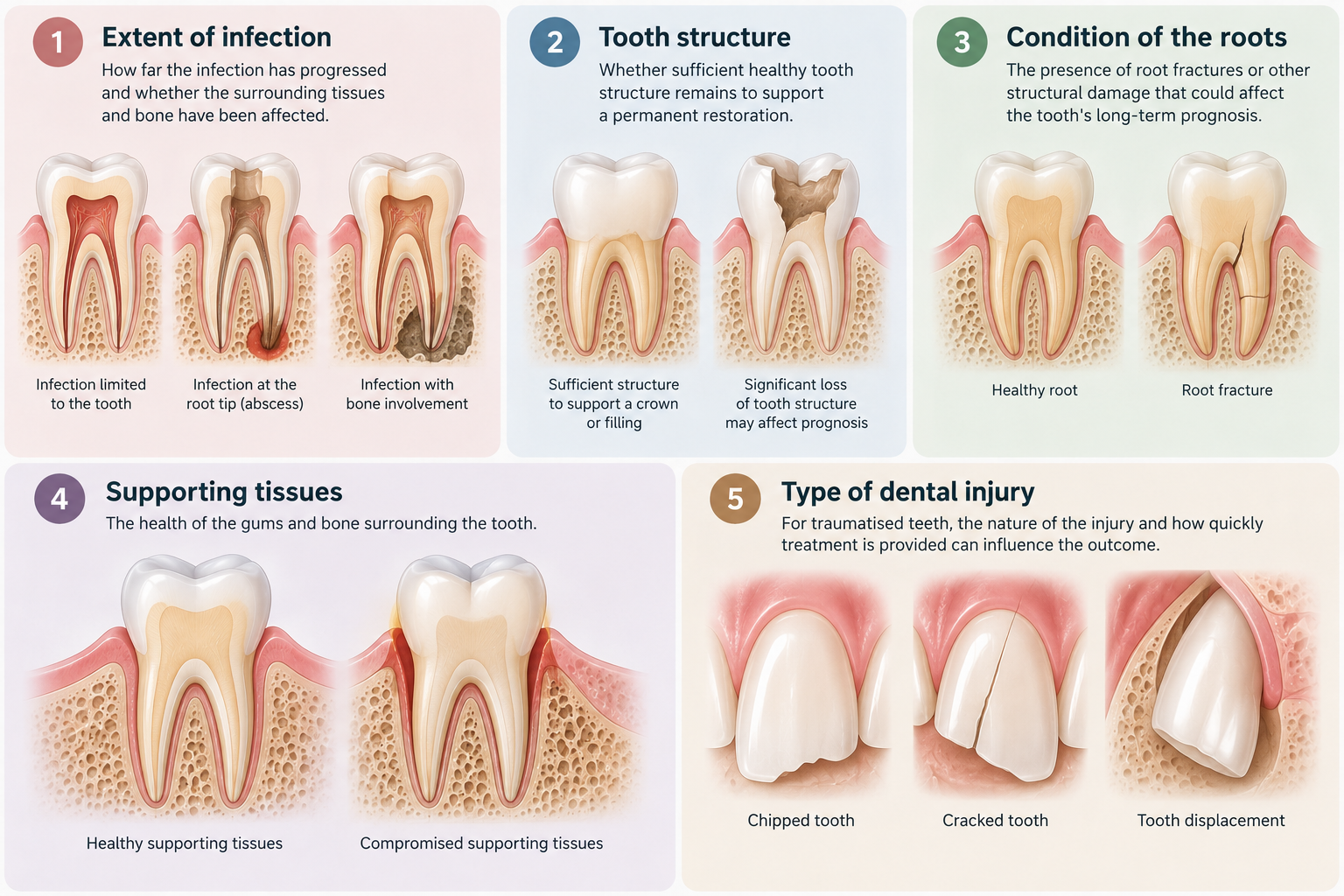
However, whether a tooth can be saved depends on several factors, including:
- Extent of infection — How far the infection has progressed and whether the surrounding tissues and bone have been affected.
- Tooth structure — Whether sufficient healthy tooth structure remains to support a permanent restoration.
- Condition of the roots — The presence of root fractures or other structural damage that could affect the tooth’s long-term prognosis.
- Supporting tissues — The health of the gums and bone surrounding the tooth.
- Type of dental injury — For traumatised teeth, the nature of the injury and how quickly treatment is provided can influence the outcome.
Not every tooth can be preserved through endodontic treatment. If a tooth is severely fractured, has extensive structural damage or cannot be predictably restored, extraction may be necessary.
Your endodontist will assess the tooth’s condition and recommend the most appropriate treatment, with the aim of preserving your natural tooth whenever clinically possible.
Emergency endodontic treatment in Singapore
At Aster Dental, we provide endodontic care for patients experiencing severe tooth pain, dental infections and complications involving previously root canal-treated teeth. Our approach focuses on identifying the underlying cause of your symptoms and providing appropriate treatment to relieve discomfort while preserving your natural teeth whenever possible.
Our endodontist will assess the affected tooth through a clinical examination and diagnostic tests before recommending treatment. Depending on your condition, this can involve emergency pulp treatment, root canal treatment or other procedures to manage infection and prevent further complications.
If you are experiencing severe tooth pain, swelling or other symptoms requiring urgent dental attention, contact us to enquire about appointment availability and arrange an assessment.
Frequently asked questions
Is emergency endodontic treatment painful?
Emergency endodontic treatment is typically performed under local anaesthesia to numb the affected area. The procedure aims to relieve pain caused by inflammation or infection, although some tenderness can persist for a few days afterwards.
Can emergency root canal treatment be completed in one visit?
Yes, some emergency root canal treatments can be completed in a single appointment if suitable and feasible. However, teeth with complex root anatomy, extensive infection or other complications will require additional visits to complete treatment.
Will antibiotics treat a dental infection?
Antibiotics alone cannot eliminate infection within the root canal system. Treatment generally involves removing the infected tissue or draining an abscess. Antibiotics are prescribed when clinically indicated, such as when an infection is spreading or causing systemic symptoms.
Can a tooth need emergency endodontic treatment without severe pain?
Yes. Some infected teeth cause little or no pain, particularly when the dental pulp has lost vitality, but presented with a facial swelling. This indicates spreading infection and requires prompt assessment.
Will emergency endodontic treatment stop my toothache immediately?
Most patients experience some relief after the source of inflammation or infection has been treated. However, some may continue to worsen for the next 24 – 48 hours after treatment before settling down in acute abscesses. The extent and timing of pain relief depend on the underlying condition and treatment performed.
Can a previously root canal-treated tooth develop another infection?
Yes. Infection can persist or return if bacteria remain within the root canal system or enter through new decay, cracks or compromised restorations. Depending on the tooth’s condition, endodontic retreatment or other procedures can be considered.
Will I need a crown after emergency root canal treatment?
Not necessarily. The need for a crown depends on the tooth’s location, the amount of remaining healthy tooth structure and its condition following treatment. Back teeth often benefit from cuspal coverage to reduce the risk of fracture, while some front teeth can be restored with a filling.